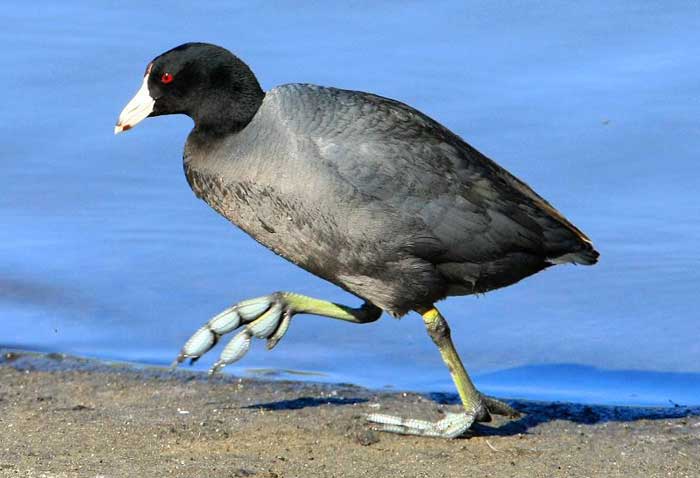
Coots are a species of waterbird that are found in many parts of the world. Known for their distinctive white bill and black plumage, coots are a common sight in lakes, ponds, and other freshwater habitats. In this article, we’ll take a closer look at the distribution area and migration routes of coots.
Distribution Area of Coots
Coots are found in many parts of the world, with populations in Europe, Asia, Africa, and the Americas. In Europe, coots are found throughout the continent, from Scandinavia to the Mediterranean. In Asia, coots are found in areas such as Russia, China, and Japan, while in Africa, coots are found in regions such as the Nile Delta and the Rift Valley.
In the Americas, coots are found in both North and South America. In North America, coots are found throughout much of the United States and Canada, as well as in parts of Mexico and the Caribbean. In South America, coots are found in regions such as the Amazon Basin and the Andes Mountains.
Migration Routes of Coots
Coots are migratory birds, meaning that they travel long distances between their breeding and wintering grounds. The migration routes of coots can vary depending on the population and location.
In Europe, coots typically migrate south to wintering grounds in the Mediterranean and North Africa. Some populations also migrate to Spain and Portugal, while others remain in northern Europe throughout the winter.
In North America, coots typically migrate south to wintering grounds in Mexico, Central America, and the Caribbean. Some populations also migrate to South America, while others remain in the southern United States throughout the winter.
In South America, coots typically remain in the region throughout the year, although some populations may migrate short distances to areas with more favorable conditions.
Research and Conservation Efforts
Research on coots has focused on understanding their migration patterns, breeding behaviors, and population dynamics. Conservation efforts for coots have focused on protecting their habitat and reducing threats such as pollution and hunting.
In the UK, the Royal Society for the Protection of Birds has undertaken conservation efforts to protect coots and their habitat. In North America, the US Fish and Wildlife Service has also worked to protect coots and their habitat through programs such as the Migratory Bird Treaty Act.
Conclusion
Coots are a fascinating species of waterbird, with a broad distribution area and complex migration routes. Understanding their behavior and population dynamics is key to protecting these birds and their habitats. Through continued research and conservation efforts, we can help ensure the survival of these important species for generations to come.